“What is said in the room stays in the room.” That’s the unwritten rule of diplomatic talks.
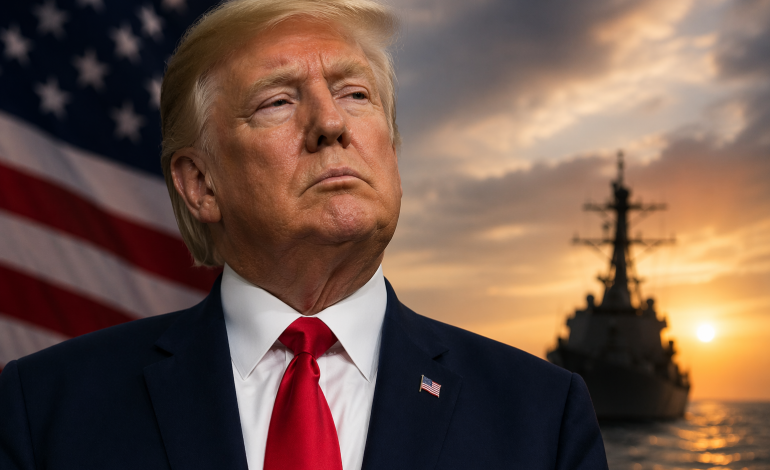
But the US President has a different approach. He posts about it. A lot.
In the past two weeks, as American and Iranian delegations worked through Pakistani mediators to put a formal peace framework in place, Trump published over 900 words about the war on Truth Social in a single morning.
He contradicted his own senior officials on live television. He told reporters details of a nuclear agreement that Iran immediately denied ever agreeing to.
And on Thursday, he ordered the US Navy to “shoot and kill any boat” laying mines in the Strait of Hormuz.
The talks are now in limbo.
The post that broke the room
The clearest picture of how the posts are affecting diplomacy came not from Iran but from inside Trump’s own administration.
Multiple senior officials spoke anonymously to the Wall Street Journal and CNN this week, describing what one source characterised as the president’s “leadership and decision-making pathologies.”
That kind of language, from officials inside the White House, is extraordinary.
The specific incident that triggered the alarm was when Trump told reporters that Vice President JD Vance would not be travelling to Islamabad to lead the next round of talks, citing unspecified security concerns.
At the same moment, UN Ambassador Mike Waltz and Energy Secretary Chris Wright were on separate television programs saying the opposite.
Eventually, Vance did make the trip. Trump was wrong, and his officials had to publicly clean it up in real time.
That same week, Trump claimed publicly that Iran had agreed to an “unlimited” suspension of its nuclear program.
Iran’s foreign ministry spokesperson Esmaeil Baghaei denied it within hours in a statement to Iranian state broadcaster IRIB.
Whatever the actual state of the negotiations at that moment, the public denial handed hardliners in Tehran a domestic gift they did not have to work for.
“No pressure” with a blockade running
On April 20, Trump published a series of posts on Truth Social.
He covered comparisons to previous US conflicts, dismissed suggestions that Israel had pushed the US into the war and declared that his eventual deal would be “FAR BETTER” than Obama’s 2015 nuclear agreement.
He wrote that he is “under no pressure whatsoever,” which may be true politically, but sits oddly next to a US naval blockade of Iranian ports that remains in full effect.
The blockade is the part that is doing the most economic damage and the least diplomatic work right now.
Bloomberg reported this week, citing two US officials familiar with the matter, that the blockade — combined with Trump’s social media posts — has been directly “detrimental to ongoing negotiations.”
The Pakistanis, who have invested significant political capital in positioning themselves as the trusted go-between, are finding it harder to keep both sides at the table when the American president is publicly escalating between sessions.
Then on Thursday, Trump posted on Truth Social that he has ordered the Navy to “shoot and kill any boat” laying mines near the Strait of Hormuz, adding that minesweeping operations would continue “at a tripled up level.”
Oil markets, which had started to price in a diplomatic resolution, moved sharply on the news.
Iran’s own dysfunction is real, but it is not the whole story
It would be incomplete to frame this as entirely a problem of Trump’s making. Iran’s government is genuinely fractured on how to respond.
Trump described it as “seriously fractured” in his ceasefire extension post on April 21, and he is not wrong. Different factions inside the Iranian system are pulling in different directions, and the absence of a unified proposal from Tehran is a real obstacle.
Mahdi Mohammadi, an adviser to Iranian Parliament Speaker Ghalibaf, who has led the Iranian negotiating delegation, did not help matters when he said publicly that “the losing side cannot dictate terms” and that the ceasefire extension “means nothing.”
Former Mossad chief Yossi Cohen, speaking at an event in Jerusalem, cautioned that no agreement would change Iran’s “fundamental ambitions.”
The ceasefire extension Trump announced last week did not include an end date, which removed one source of pressure on Iran.
His advisers warned him privately that an open-ended extension could allow Tehran to run out the clock. There is no public indication that the warning changed anything.
The market signal worth watching
When the first ceasefire was agreed in early April, international oil prices fell 13% almost immediately, and S&P 500 futures pointed to a 2% open.
That is how sensitive energy markets are to every word out of this process. The “shoot to kill” post this week reversed a portion of that move.
What is becoming clear is that markets are essentially trading Trump’s Truth Social feed, with the Strait of Hormuz as the underlying asset. Every post that sounds like escalation pushes oil up.
Every post that sounds like a deal pushes it down.
The problem is that neither movement is necessarily connected to what is actually happening in the negotiating room, because the posts themselves have become part of the negotiation, and not in a way that is helping.
Trump still insists time is not his adversary.
The ceasefire, extended without a deadline, is beginning to look like proof of exactly that.
The post Inside the diplomatic fallout from Trump's Truth Social war commentary appeared first on Invezz